Showing posts with label Colour. Show all posts

Wednesday, August 3, 2011

Colour his world

Today, Monday, August 1, 2011, Arts, Page 2 & 3
From
http://imcmsimages.mediacorp.sg/CMSFileserver/documents/006/PDF/20110801/0108ATP044.pdf
Source Website:
http://www.todayonline.com/Entertainment/Arts/EDC110801-0000005/Colour-his-world
By
Mayo Martin, 04:45 AM Aug 01, 2011


PHOTO: Souri
Copyright © MediaCorp Press Ltd

http://www.todayonline.com/Entertainment/Arts/EDC110801-0000005/Colour-his-world


A retrospective on Liu Kang sheds light on the Nanyang pioneer artist


PHOTO: Liu Kang borrows traditional Chinese ink landscape styles but fills it with colour for Life By The River
Copyright © MediaCorp Press Ltd
Today, Monday, August 1, 2011, Arts, Page 2 & 3


"In terms of sheer colour, he is the boldest painter in the country; no one else tries, and gets away with, such flaring contrasts of red and blue as Liu Kang does."

That bold statement was uttered back in 1957 by the Singapore-based Australian art critic Frank Sullivan, and more than 50 years later, these words still resonate distinctly.


PHOTO: A Girl Sitting On Verandah/ My Young Wife
Copyright © MediaCorp Press Ltd
http://www.todayonline.com/Entertainment/Arts/EDC110801-0000005/Colour-his-world


While there are many delightful aspects to pick out and mull over in Liu Kang: A Centennial Celebration, the ongoing survey show at the Singapore Art Museum, none stands out more than the late Nanyang pioneer's lust for life through his sheer passion for colour.


PHOTO: Liu Kang's Offerings.
Copyright © MediaCorp Press Ltd
http://www.todayonline.com/Entertainment/Arts/EDC110801-0000005/Colour-his-world


This is the fourth extensive exhibition on Singapore's pioneer artists by the National Art Gallery, Singapore, after Anthony Poon, Yeh Chi Wei and Cheong Soo Pieng; and over the course of 100 paintings, sketches and artefacts, audiences can immerse themselves in the world of an artist who had once described his life as colourful as his paintings.


The travelling man and his art

Like many of his contemporaries who would eventually emerge as the cornerstones of the country's fledgling art scene, Liu shuffled from place to place before settling in Singapore. Born in Fujian Province in China in 1911, he found himself in the Malaysian town of Muar, where his father worked as a rubber merchant. He later studied in Paris in the late 1920s, returning as the youngest lecturer in Shanghai Academy Of Fine Art.


PHOTO: New Year Celebration In A Long House
Copyright © MediaCorp Press Ltd
http://www.todayonline.com/Entertainment/Arts/EDC110801-0000005/Colour-his-world


With the onset of Sino-Japanese war in 1937, he relocated his family to Muar and then to Singapore. He would shuffle back and forth yet again before settling for good in Singapore after World War II, where he stayed until his death in 2004 at the age of 93.

The artist's wandering ways enabled him to soak in and combine influences from Asia and Europe. The touch of post-Impressionism is very obvious in works that proudly wear their badge of allegiance to Matisse, Picasso, Gauguin and - as in one obvious exercise in unabashed homage, a sunflower painting - Van Gogh.


PHOTO: Liu Kang borrows traditional Chinese ink landscape styles but fills it with colour for Life By The River
Copyright © MediaCorp Press Ltd
Today, Monday, August 1, 2011, Arts, Page 2 & 3


According to curator Ong Zhen Min, Liu never turned his back on his roots - the meticulous and studied use of lines in his paintings and drawings were drawn from the tradition of Chinese ink painting. In the famous piece, Life By The River, for example, Liu transports a kampong scene within a composition reminiscent of Chinese ink landscapes and renders it as an oil painting.

In Liu Kang: A Centennial Celebration, the exhibition itself eschews (avoid) the more linear, chronological approach to track down Liu's artistic journey - mostly because the Nanyang artist doesn't seem to lend himself to that.


PHOTO: National Day
Copyright © MediaCorp Press Ltd
http://www.todayonline.com/Entertainment/Arts/EDC110801-0000005/Colour-his-world


"He moves back and forth styles," said Ong with a wry smile.

Even the curators' tactics to divide the show into four thematic (relating) sections - early works, artistic practices (line works, sketches),subject matter (works from his travels and motifs), and a "documentation" of Singapore and Malaya's landscapes - seem tenuous (not substantial) at times.

Depending on your disposition (inherent qualities of mind and character), it could either be frustrating or liberating. Or both.


PHOTO: Souri
Copyright © MediaCorp Press Ltd
http://www.todayonline.com/Entertainment/Arts/EDC110801-0000005/Colour-his-world


However, freed from the weight of chronologically witnessing an artist developing his craft, one can see Liu Kang as a man of many dispositions. At times, he comes across as an artist who really seemed to love doing nudes or portraits, or, as the case may be, portraits of artists doing portraits or landscapes. Ong said that as an artist, Liu considered portraiture as a more solid foundation for an artist than still life.


PHOTO: Siesta
Copyright © MediaCorp Press Ltd
http://www.todayonline.com/Entertainment/Arts/EDC110801-0000005/Colour-his-world


At other times, in the subtlest of ways, the artist is a guy with a sense of humour. How else can you explain The Padang, with its image of a man with a lawnmower set in the middle of, well, the most recognisable field in the city? Or maybe he's simply one who is at once restless and playful in his attempts to jump from various styles.

While some observers may look at Liu as a one-dimensional artist - or at the very least, not as versatile or conceptually innovative as his fellow contemporary Cheong Soo Pieng, for example - his dedication and approach to the use of colour comes across as a satisfyingly unifying element in the show.


PHOTO: Liu Haisu's Tenth Trip To Mount Huangshan
Copyright © MediaCorp Press Ltd
http://www.todayonline.com/Entertainment/Arts/EDC110801-0000005/Colour-his-world


How colour shaped Liu Kang's world

The use of colour had been something that was hinted early on in Liu's career, but seemed to have exploded after the now-historically seminal Bali trip in 1952 with the likes of fellow artists Cheong, Chen Wen Hsi and Chen Chong Swee.


PHOTO: Liu Kang's Indian Musicians.
Copyright © MediaCorp Press Ltd
http://www.todayonline.com/Entertainment/Arts/EDC110801-0000005/Colour-his-world


The emergence of more vibrant colours in his works - arguably even more so than the rest of his contemporaries - was brought about by the efforts to capture his tropical surroundings, said Ong. But it wasn't only the environment that burst with colours. Liu was also entranced by batik patterns, which he wove into to works like Women Drying Sarongs.

But it wasn't just colour that oozed from his works post-Bali. More importantly, Liu began to actively articulate what was integral in this so-called Nanyang style of art, with its mix of East and West in a tropical blender.


PHOTO: Artist And Model
Copyright © MediaCorp Press Ltd
http://www.todayonline.com/Entertainment/Arts/EDC110801-0000005/Colour-his-world


From the 1950s, Liu became a vocal advocate (publicly supports or recommends) of Nanyang art, said co-curator Grace Tng. He presided over the Singapore Art Society for a decade in the late 1960s and, while his contemporaries were seemingly focused on simply making art, Liu also dabbled in writing about art. His writings can be seen in Liu Kang:

Essays On Art And Culture, a compilation of his articles that has been translated from Chinese into English to coincide with this retrospective (looking back on) exhibition.


PHOTO: The National Art Gallery, Singapore, will be commemorating the centennial birth of Liu Kang (1911 – 2011).
http://www.mhisham.org/wp-content/uploads/2011/03/416px-LiuKangBackView.jpg
http://www.mhisham.org/?p=1743

From articles about fellow artists like Chen Wen His and Georgette Chen, to his musings on music, medical science - and even French ballet; to his travel observations on India and Bali, to problematising Singapore's own art scene, and even pushing, way ahead of its time, the idea for a South-east Asian arts centre, Liu was more than an artist - he was an intellectual. And that, really is what makes him stand out.


PHOTO: The National Art Gallery, Singapore, will be commemorating the centennial birth of Liu Kang (1911 – 2011).
http://www.mhisham.org/wp-content/uploads/2011/03/481px-LiuKangRecollection.jpg
http://www.mhisham.org/?p=1743


Liu Kang: A Centennial Celebration runs until Oct 16 at the Singapore Art Museum, 71 Bras Basah Road.

For details visit
www.nationalartgallery.sg. Liu Kang: Essays On Art And Culture is available at S$28.88 from Museum Shop, Kinokuniya and Select Books.


Reference

Wednesday, July 13, 2011

Yoga Colour

Today, Tuesday, July 12, 2011, Hot News, Page 2 (Photo)
www.todayonline.com
From
http://imcmsimages.mediacorp.sg/CMSFileserver/documents/006/PDF/20110712/1207HNP002.pdf
Source Website:
http://powerofnature.wordpress.com/2007/08/09/colour-therapy-for-yoga/ (Texts)

Project your true colours. Like the peacock feather ... discover blissful, spiritual awakening. Be all-seeing with knowledge and wisdom gained from compassionate, unbiased 'eyes'. Take pride in your nobility of character and regality (state of being a king or queen) of posture. See the yoga in you.


PHOTO: Yoga Colour
Today, Tuesday, July 12, 2011, Hot News, Page 2

http://imcmsimages.mediacorp.sg/CMSFileserver/documents/006/PDF/20110712/1207HNP002.pdf


The Power Of Colour

From:
http://powerofnature.wordpress.com/2007/08/09/colour-therapy-for-yoga/

You know that everything has energy. Life itself is pure energy. If you have ever felt the vital force of color vibrating from the environment, you have come one step closer to being connected not only with your spirit, by with your physical senses as well.

Each light and colour consists of many electromagnetic waves which vibrate at different frequencies. The reason you see colour is that these vibrations are received by the sensitive photoreceptors in the retina of the eye, called cones which able to translate the vibrating energy of each object into colours sending messages to our utmost powerful control centre – the brain.

In turn, the brain generates the release of certain hormones and neurochemicals depending on the messages it gets. For example, by looking at a particular colour you may stimulate or suppress pituitary and pineal glands located in the centre of the cranium. These glands regulate the function of hormones governing metabolism and growth of the body, sleep patterns and blood pressure functions, appetite and thirst sensations.

When the energy in one part of the body gets out of balance, the chain reaction will begin to happen leading to changes in all systems and organs. Hormonal disturbances, mood fluctuations, impaired digestion and other illnesses may all be caused by many different events, so correcting them all may need to be done through a variety of approaches. And something as simple as being exposed to the correct colour has a wonderful ability to help in treatment and prevention of unwanted existing and potential conditions related to different functions in the system.

Today, natural therapists use Colour Therapy as an alternative completely non-invasive method to restore energy and boost the natural immunity bringing vitality to one’s life. Therapists believe that as light and colour is received and absorbed through the skin, it works on the entire body conveying equilibrium to growth and sleep patters, nervous and immune function, sexual behavior and mood, digestion and appetite.


PHOTO: Yoga Colour
Today, Tuesday, July 12, 2011, Hot News, Page 2

http://imcmsimages.mediacorp.sg/CMSFileserver/documents/006/PDF/20110712/1207HNP002.pdf


Meaning of Colors
From: http://powerofnature.wordpress.com/2007/08/09/colour-therapy-for-yoga/

RED stimulates brain wave activity, increases heart rate, respirations and blood pressure, excites sexual glands. It warms us and awakens us physically and energizes our blood. It is a good color to wear when we have colds and poor circulation. Too much red can over stimulate and make some illnesses worse.

ORANGE is the color of joy and wisdom, energy and internal connection. It stimulates appetite and it is a good color for illnesses of the colon and digestion.

YELLOW is the color of wisdom and emotions. It energizes, relieves depression, improves memory, stimulates appetite and helps in digestive problems.

GREEN has a calming and balances effect on the nervous system. Soothing and relaxing, green color ease from depression, anxiety, nervousness. Since green stimulates growth, it should be avoided in cancers and other tumors.

BLUE is calming and cooling to our system and hence, a good color to counteract hypertension. Spiritually it is the color of health and connects us to holistic thought.

INDIGO is the color for healing. It stimulates immunity and enhances intuition connecting us to our unconscious self.

VIOLET is cleansing, strengthening, and awakening. It has the power to suppress appetite restoring the peaceful environment. It affects the skeletal system of the body and is a good color for improving immunity, cancerous conditions, and arthritis. It also purifies the system and is an excellent color for headaches and migraines.


PHOTO: Yoga Colour
Today, Tuesday, July 12, 2011, Hot News, Page 2

http://imcmsimages.mediacorp.sg/CMSFileserver/documents/006/PDF/20110712/1207HNP002.pdf


Reference

Saturday, June 11, 2011

Soar with colour

MY PAPER THURSDAY JUNE 10, 2011, PAGE 38, Soar with colour
From
http://imcmsimages.mediacorp.sg/CMSFileserver/documents/006/PDF/20110609/0906WNP044.pdf


PHOTO: Soar with colour
MY PAPER THURSDAY JUNE 10, 2011, PAGE 38, Soar with colour


PHOTO: Jurong Bird Park Waterfall Aviary
By Robert J. Steiner, © 2005
http://www.streetdirectory.com/stock_images/travel/simg_show/11393629670097/1/jurong_bird_park/
http://www.streetdirectory.com/stock_images/travel/scenery_normal/11393629670097/jurong_bird_park_waterfall_aviary_/


PHOTO: Jurong Bird Park Waterfall Aviary
By Robert J. Steiner, © 2005
http://www.streetdirectory.com/stock_images/travel/simg_show/11393641300812/1/jurong_bird_park/
http://www.streetdirectory.com/stock_images/travel/scenery_normal/11393629670097/jurong_bird_park_waterfall_aviary_/


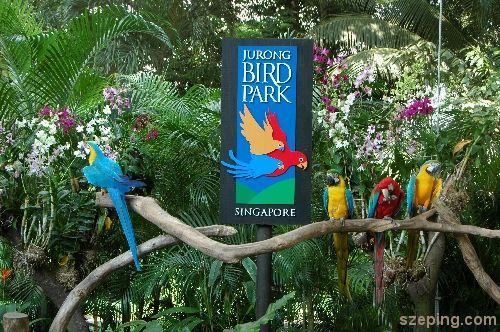
PHOTO: Three Finalists’ visit to Jurong Bird Park Three of omy’s Singapore Blog Awards 2008 finalists, Szeping, Darren 和 阿谁 visited the Jurong Bird Park together for a photography field trip.
Picture via Szeping’s blog (http://www.szeping.com/?p=146)
http://lh5.ggpht.com/szeping.low/SJRw65MZu_I/AAAAAAAABBI/-y6ylzUA004/s800/Parrot2.jpg
http://blog.omy.sg/sgblogawards/archives/171

http://www.szeping.com/?p=146

https://lh5.googleusercontent.com/-echARmvQgbs/SJRw65MZu_I/AAAAAAAABBI/WAxqL6h4a28/Parrot2.jpg
https://picasaweb.google.com/szeping.low/JurongBirdPark#5229929224371551218


PHOTO: SINGAPORE - Jurong Bird Park - Welcome to Jurong Bird Park:
Posted: Tuesday, December 14, 2010

Jurong Bird Park is the largest bird park in the world, offering a 20.2-hectare hillside haven for 4,600 birds representing 380 species, located in Jurong Hill, Singapore.
Linkhttps://blogger.googleusercontent.com/img/b/R29vZ2xl/AVvXsEhy71MurwxQP8uqq4vbcc9RXLaQE8bbzbpsGZnZWw9qMtpIqcpnnQBYOGfaJ7VAumrOanIRc5Db1-67Yz4GdEBN42t3hU7zQ0YJxVHNShBsjN8cABHeNtGKdbQFX9hEuyaiJmgMYg5uDok/s1600/Jurong+Bird+Park__02.jpg
http://thalicious-life.blogspot.com/2010/12/singapore-jurong-bird-park.html


PHOTO: After the show, Don't forget to take a picture together with Beautiful Birds:
Posted: Tuesday, December 14, 2010

https://blogger.googleusercontent.com/img/b/R29vZ2xl/AVvXsEhmGcDJIgG_jrM_0Rgw2-PAyIEAl2yX_MUx8M7bibfa5i78aUpBnvZPR_BVztCjqWZix-enM_Tu91nyyWHdyqXoGu2S6QMA9b_4fw-C8RqcsclL861mcqD2Z7qU29mTDP7yf1fIz7bl7qg/s1600/Jurong+Bird+Park__04.jpg
http://thalicious-life.blogspot.com/2010/12/singapore-jurong-bird-park.html


PHOTO: Having amazing experience at Lory Loft:
Posted: Tuesday, December 14, 2010
Lory Loft is the world’s largest Lory Flight Aviary. At the two-tiered central feeding tower of Lory Loft, visitors will have the opportunity to feed the beautiful birds by hand with a special nectar mixture.
https://blogger.googleusercontent.com/img/b/R29vZ2xl/AVvXsEiZ281MVFS2EOFh5qvw_DTbkKzfO-SriWqGisgss0-QAqyesggBj3-aaytXLrzc_A0QYcHFvIHrIAdORJLnu0EJULSE3OuJoAzGXhCXugvrtouHSuAlMRxuJ1HacCZrK8-xek3DII1oGLY/s1600/Jurong+Bird+Park__07.jpg
http://thalicious-life.blogspot.com/2010/12/singapore-jurong-bird-park.html


PHOTO: SINGAPORE - Jurong Bird Park
Posted: Tuesday, December 14, 2010

https://blogger.googleusercontent.com/img/b/R29vZ2xl/AVvXsEgNeO_O-TdFW5QWx6bNzFPznXwaZXnbFeZhWaQUa0Bn9_Otg7VpWgrua701oG7qcKiyTkP12sPd0v3tLqatZ_YK945KXLH4j13ic6nIOQ7tVM_NVB7lYVA_7LD2_RIVAorr8pPVtUGgVN0/s1600/Jurong+Bird+Park__09.jpg
http://thalicious-life.blogspot.com/2010/12/singapore-jurong-bird-park.html


PHOTO: Jurong Bird Park - The World’s Largest
Opened in 1971, Jurong Bird Park is the largest bird park in the world, offering a 20.2-hectare hillside haven for 4,600 birds representing 380 species. Its Heliconia Repository, with 108 heliconia species and cultivars in its collection, is one of the largest in the region. With key attractions such as the Bird Discovery Centre, African Waterfall Aviary, Lory Loft Aviary, Southeast Asian Birds Aviary and the award-winning African Wetlands, the Bird Park attracted close to 900,000 visitors in 2009.

Committed towards conservation, the Bird Park is the first in the world to breed the Twelve-wired Bird of Paradise in captivity and received the Breeders’ Award from the American Pheasant and Waterfowl Society in 2001. In 2006, the Bird Park became the recipient of the Conservation & Research Award for the Oriental Pied Hornbill Conservation Project by IV International Symposium on Breeding Birds in Captivity (ISBBC). In Asia, Jurong Bird Park is the only park in the Asia Pacific to have an Avian Hospital. It has a Breeding and Research Centre tasked to ensure the welfare, breeding and promulgation of birdlife and is also an Official Rescue Avian Centre.
http://sg.theasianparent.com/parenting-resources/wp-content/uploads/2011/03/271563.png
http://sg.theasianparent.com/parenting-resources/ads/jurong-bird-park/


PHOTO: Bali Bird Park
Posted: 4th september 2008
The two of them looked so romantic as they necked each other, and shared a bite of a biscuit. It was possible to even stroke them gently.:)
http://chekyang.com/musings/wp-content/uploads/2008/09/blog-2008-bali-dsc_7165-balibirdpark.jpg
http://www.chekyang.com/musings/2008/09/04/bali-bird-park/


Reference

Tuesday, January 11, 2011

Colour my world

Today, Tuesday January 11, 2011, Health, Page 14, 15
Source Website:
http://www.todayonline.com/Health/EDC110111-0000167/Colour-my-world
By
Eveline Gan, eveline@mediacorp.com.sg, 05:55 AM Jan 11, 2011


PHOTO: The colour of serenity
Copyright © MediaCorp Press Ltd

http://imcmsimages.mediacorp.sg/cmsfileserver/showimageCC.aspx?300&450&f=1832&img=1832_329357.jpg&h=300&w=450
Today, Tuesday January 11, 2011, Health, Page 24, 25


Can colours affect your mood?

As you look at the "restful" colours in the picture accompanying this story, you may feel stress ebbing away. Your breathing starts to improve and your tensed, hunched up shoulders relax.


On the contrary, you may find yourself getting irritated and fatigued, if you are surrounded by too many bright colours such as yellow and red. Or so proponents of colour psychology claim.

Art therapist Esther Ann, from National University Hospital's department of rehabilitation, is no stranger to colours and its emotional effects. In the field of art therapy, colour is thought to be closely related to a person's emotion.

"Colours may alter moods, influence behaviour and may even cause physical reactions such as raising one's blood pressure or suppressing one's appetite," said Ms Ann.

Mr Jeremy Rowe, managing director of AzkoNobel Decorative Paints in South East Asia and Pacific, the manufacturer of Dulux, cited an example.

"For instance, studies have shown that looking at red can increase heart rate, prompt the release of adrenaline into the blood stream and raise blood pressure," said Mr Rowe.

According to Dr Adrian Wang, consultant psychiatrist at Gleneagles Medical Centre, a person's mood is affected by small cues in the day that can have "a knock-on effect" on how he feels and thinks.

"Such cues include light and colour. It's not uncommon to feel gloomy during a dark, cloudy day. So - yes - colours, or rather our perception of colours, can affect how we feel. The colour of the room, or a person's clothes, can influence one's feelings in subtle ways," he said.

Explaining why colours can affect a person's emotions, Ms Ann said: "Attached to the human brain are pineal glands, which control the daily rhythms of life. When light enters through the eyes or skin, it travels along neurological pathways to these glands. Different colours give off different wavelength frequencies which can have varying effects on us."


Not just a matter of aesthetics
Which is why if you're thinking of giving your walls a fresh coat of paint before the Lunar New Year, what colours you choose can impact your emotional wellbeing.

Although there is "no solid proof" and it may not necessarily work for everyone, certain hues may be more suitable than others for certain areas in your home.

Here's a colour-by-colour checklist by the experts, and their potential effects on one's mood.


Use green and blue, to achieve a serene, calming effect
According to Mr Rowe, most people tend to associate tranquillity, calmness and relaxation with these "restful colours".

He added that since the eye focuses green exactly on the retina, it is considered the most restful colour on the muscles of the eye.

"Blue is recommended for frequently-used rooms because it is supposed to be a soothing and relaxing colour. According to American art historian, Faber Birren, who wrote numerous books on colour theory, blue can apparently promote oxidation in the tissues, lower blood pressure and decrease respiration," said Mr Rowe.

Use these colours in rooms such as the study room or library, where "a cool head" is needed for mental tasks. They are also good for the bedroom, where you go to relax.


Use orange and yellow to achieve an invigorating effect, or to whet the appetite
It is believed that the colours, orange and yellow, are often associated with food and can stimulate the appetite. No brownie points for figuring out why many restaurants and food advertisements use these citrusy colours.

However, be careful where you use these bright colours in your home. Ms Ann said such colours reflect more light and can excessively stimulate the eyes, causing irritation and fatigue.

Use these colours in the kitchen and dining room - don't you want your guests to slurp up your food? But you may want to steer clear of these colours if you're on a diet.


Use purple to get your creative juices flowing
According to Mr Rowe, purple embodies a balance of stimulating red and calm blue.

"For this reason, purple is said to be uplifting, often offering a sense of spirituality and encouraging creativity. A lighter shade of purple is believed to provide a peaceful environment and relieve tension," he said.


What about very dark colours such as black or grey?

While dark colours may evoke negative emotions, Mr Rowe, who sees more requests from clients for darker neutrals such as grey and dark brown, said that that using slightly darker hues may "evoke a warmer and cosier feel".

While sticking to "positive" colours may help uplift the spirits, Dr Wang said relying on colours alone will not help a person suffering from severe depression.

Mr Rowe also added that ultimately, the perception of different colours can vary from person to person, based on cultural and family influences, as well as one's personal experience.

"How we perceive colour is also influenced by the intensity and lightness (light reflectance value) of the hue, as well as where it is placed. So in the end, it is quite subjective and personal," he said.

So who's to say you're mad, if grey makes you happy?
By Eveline Gan, eveline@mediacorp.com.sg, 05:55 AM Jan 11, 2011

Reference